SPECIALTY CLINICAL GUIDE
Shrink HIFU Lifting
Shrink HIFU lifting at JD Clinic in Gangnam, Seoul — focused ultrasound for mild facial laxity, a 15–20 minute session after numbing cream, same-day activity and the risks worth knowing.
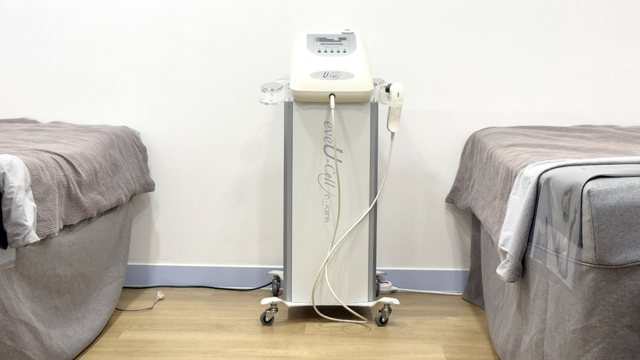
Shrink HIFU Lifting is a non-surgical ultrasound treatment that delivers focused energy beneath the skin to support tightening and lifting, aimed at the appearance of facial sagging with a short procedure time and minimal interruption to daily life.
Shrink HIFU Lifting

Medically reviewed by Dr. Jin-Woo Doh, Representative Director, JD Clinic, Gangnam, Seoul
Shrink HIFU Lifting is a non-surgical ultrasound treatment that delivers focused energy beneath the skin to support tightening and lifting, aimed at the appearance of facial sagging with a short procedure time and minimal interruption to daily life. At JD Clinic in Gangnam, Seoul it is among the quickest of the focused ultrasound options — roughly fifteen to twenty minutes of treatment after twenty minutes of numbing cream, with daily activities resumed the same day.
JD Clinic's doctor mapping is recorded at the specialty level, so this page names the doctors who direct care for this treatment area rather than claiming that one named doctor personally carries out every individual session.
What Is Shrink HIFU Lifting?
Focused ultrasound places energy at a chosen depth beneath the skin so that the tissue contracts and new collagen forms.
The energy is focused ultrasound, delivered beneath the surface rather than across it.
The target is mild to moderate facial laxity, not advanced descent.
The session is short. Approximately fifteen to twenty minutes of treatment.
Numbing cream is used for about twenty minutes beforehand.
Maintenance is stated at approximately one to two months.
The clinic's own framing is honest about scale: this is a treatment for the appearance of mild facial sagging, designed to provide lifting and tightening without surgery. Expectations of a gradual and potentially modest result are part of its own candidate description, not a caveat added here.
Who Performs Shrink HIFU Lifting at JD Clinic

Dr. Jin-Woo Doh
Representative Director of JD Clinic
Care in this treatment area is directed by Dr. Jin-Woo Doh, Representative Director of JD Clinic, who graduated from Seoul National University College of Medicine and serves as a Guest Professor at Seoul National University Hospital. Non-surgical facial lifting and anti-aging is the first of his listed core specializations.
At consultation the clinician assesses skin laxity, facial contour, tissue thickness, medical history and aesthetic goals, and the treatment areas and ultrasound settings are selected from the patient's anatomy and suitability. The clinic's records do not describe a proprietary technique or a specific device configuration for this treatment, so this page does not claim one. For this treatment area the clinic's stated emphasis is personalised care, clear communication and planning around individual needs, with international patients given guidance on the consultation and treatment process before and during the visit.
He is a full member of the Korean Society of Aesthetic Surgery, the Korean Society of Aesthetic Plastic Surgery, the International Society of Aesthetic Surgery, the Korean Society for Obesity Treatment, and the Korean Society of Aesthetic Plastic Surgery and Laser. JD Clinic has not provided licence or board-status records for this page, so none is claimed here.
JD Clinic describes its approach as assessing skin thickness, the degree of laxity and facial structure before selecting a device, then targeting the intended tissue layer with the minimum number of passes needed rather than applying one fixed setting to every patient.
Who Is a Good Candidate for Shrink HIFU Lifting?
Adults with mild to moderate facial skin laxity
People who want non-surgical tightening and prefer minimal downtime
Those with realistic expectations of gradual, potentially modest change
Patients who need a treatment that fits into a single short appointment
Shrink HIFU lifting may be unsuitable, or should be postponed, for:
Anyone with active skin infection, an open wound or significant irritation in the treatment area
Patients with certain implanted devices, or metallic implants in the treatment path
Anyone whose medical condition makes focused ultrasound inappropriate
Patients who are pregnant
People with significant facial volume loss, which focused ultrasound could worsen
That last exclusion is the one most worth pausing on. Focused ultrasound acts on tissue including fat, so a face that has already lost volume can look more hollow rather than more lifted. It is a genuine clinical contraindication rather than a cautious footnote, and it is the reason an in-person assessment matters more than a photograph.
It is also the reason the same complaint can point in two opposite directions. A patient who describes their face as "falling" may have skin that has loosened over a stable foundation, or a foundation that has thinned beneath skin that is still reasonably firm. The first responds to tightening. The second usually needs volume restored rather than tissue heated, and a tightening treatment applied to it can make the underlying problem more obvious rather than less. Telling those apart takes looking at the face directly, in movement as well as at rest — which is why a consultation that declines to commit to a device before seeing you is doing the right thing rather than being unhelpful.
What to Expect: Procedure, Recovery, and Results Timeline
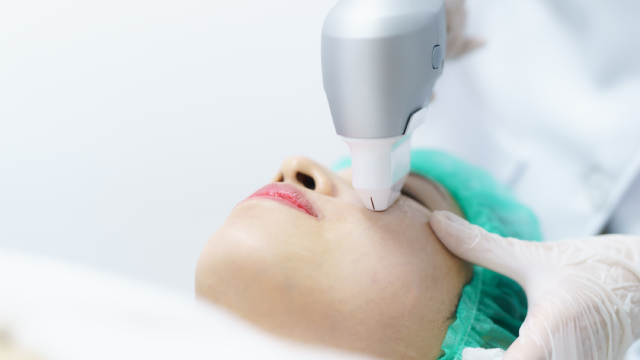
The sequence is facial assessment and treatment planning; cleansing and skin preparation; anaesthetic cream for approximately twenty minutes; focused ultrasound delivery to the planned areas; then a post-treatment assessment and aftercare instructions.
Stage
What happens
Timing
Assessment
Laxity, contour, tissue thickness, history, goals
Before treatment
Numbing
Anaesthetic cream
Approximately 20 minutes
Treatment
Focused ultrasound to planned areas
Approximately 15–20 minutes
Same day
Return to daily activities
Immediately
Early days
Temporary redness, swelling, tenderness or tingling
Settles
Maintenance
Stated period
Approximately 1–2 months
During treatment you may feel warmth, tingling, prickling or brief discomfort, with sensitivity varying by person and by area. Afterwards, patients resume daily activities on the day of treatment — though as the clinic's own wording puts it, same-day activity does not mean that every side effect will have resolved.
Before treatment, disclose medical conditions, medications, allergies, implanted devices and previous facial aesthetic treatments, arrive with clean skin, and do not attend with skin that is irritated, sunburned or infected. Do not make medication changes without medical advice. Afterwards, protect the skin from ultraviolet exposure, wash the face gently, and avoid harsh rubbing or irritating skincare products while the skin is sensitive.
The treatment is short and non-surgical, so some patients may be able to fly shortly afterwards if they feel well — but that is a judgement to make with the clinic rather than a schedule to book in advance. The clinic operates a 24-hour post-treatment feedback system, and English-language aftercare is available through remote follow-up consultation and ongoing channels such as email and messaging once a patient has returned home.
Combining Shrink HIFU Lifting with Other Treatments
Shrink HIFU lifting may be combined with selected skin-tightening or skin-quality treatments when clinically appropriate. Where the concern is both depth and surface — a contour that has softened and skin that has dulled — treating them with one device usually means serving neither well, and the combination question is really a sequencing question.
Alternatives include other focused ultrasound systems, microfocused ultrasound, radiofrequency skin tightening, thread lifting and surgical facelift. These differ in how invasive they are, in mechanism, in result, in risk and in recovery, which is why a single comparison of "which is better" has no useful answer without knowing what you are treating. More about the clinic and its team is on the JD Clinic about page.
Safety, Precision, and Clinic Standards
JD Clinic has been registered since 2023 as a Registered Medical Institution for Attracting Foreign Patients, certified by the Ministry of Health and Welfare in compliance with the Medical Overseas Expansion and Foreign Patients Attraction Act. The clinic's business registration number is 530-11-00701.
The clinic's stated quality-control process is individualised medical assessment rather than device-led selection, with treatment that is not needed avoided rather than added. Consultation and treatment are physician-led. For this treatment, risk reduction means medical-history screening, assessment of facial anatomy and suitability, appropriate device and energy settings, trained delivery, and clear aftercare instruction.
The risks here are worth stating in full rather than summarising. Temporary redness, swelling, tenderness, tingling and discomfort are the common effects. Less common but more serious are burns, altered sensation, unwanted fat loss, contour changes, and nerve irritation or injury. Persistent or worsening pain, blistering, unusual facial weakness or any other concerning symptom warrants medical advice rather than waiting — including after you have returned home.
The independent picture matches. The American Society for Dermatologic Surgery describes focused ultrasound therapy as depositing ultrasound energy below the skin surface to stimulate new collagen formation, associated with temporary redness, swelling, tingling, tenderness, bruising or numbness. The UK Department of Health and Social Care, consulting on licensing non-surgical cosmetic procedures in England, describes high-intensity focused ultrasound as directing energy to layers deep underneath the skin to encourage contraction and lifting, and radiofrequency as using heat from radio waves to cause controlled tissue damage — the reason both sit inside a proposed licensing regime. And the American Academy of Dermatology describes non-invasive skin tightening as producing gradual, modest lifting rather than surgical results, with ultrasound and radiofrequency changes typically developing over roughly two to six months.
English-language support is provided by a dedicated international patient coordinator, Cheon Seung-yeon, Team Manager, on weekdays from 09:30 to 19:00, with Korean and Japanese coordination also available.
The Bottom Line
Shrink is a short focused ultrasound treatment for mild to moderate facial laxity.
Twenty minutes of numbing cream, then roughly fifteen to twenty minutes of treatment.
Daily activities resume the same day, which is not the same as every effect having settled.
Significant facial volume loss is a contraindication, because focused ultrasound can worsen it.
Maintenance is stated at approximately one to two months.
Frequently Asked Questions
Who is a good candidate for Shrink HIFU lifting?
Adults with mild to moderate skin laxity who want a non-surgical lifting treatment and hold realistic expectations. The clinic's own candidate description includes preferring minimal downtime and accepting that change is gradual and potentially modest — which is the right expectation to bring to any device in this family.
Who should avoid or postpone treatment?
Postpone with an active skin infection, an open wound or significant irritation in the treatment area. Disclose certain implanted electronic devices, metallic implants in the treatment path, pregnancy and any other relevant medical concern. Significant facial volume loss is a separate and specific reason this treatment may not be appropriate.
How long does it take, and what anaesthesia is used?
The clinic states approximately fifteen to twenty minutes for the procedure, with an additional twenty minutes for anaesthetic cream beforehand. You may feel warmth, tingling, prickling or brief discomfort during treatment; sensitivity varies by person and by area.
How long should I stay in Korea, and when can I fly home?
For this treatment alone, the clinic describes a short, non-surgical procedure with same-day return to daily activities, so some patients may be able to fly shortly afterwards if they feel well. Confirm the timing with the clinic rather than booking on the assumption.
When will I see results, and how long do they last?
Change develops gradually as collagen forms rather than appearing at the end of the session. The clinic states a maintenance period of approximately one to two months for this treatment, which is shorter than several of the other focused ultrasound options on this menu — worth comparing directly at consultation.
What is recovery like?
Patients resume daily activities on the day of treatment. Temporary redness, tenderness, swelling or tingling may occur, and recovery varies. Protect the skin from ultraviolet exposure, wash the face gently, and avoid harsh rubbing or irritating skincare while the skin is sensitive.
What are the more serious risks?
Burns, altered sensation, unwanted fat loss, contour changes, and nerve irritation or injury are the less common but more serious risks. Seek medical advice if you develop persistent or worsening pain, blistering, unusual facial weakness or any other concerning symptom — and do so from wherever you are rather than waiting until you can return.
Does JD Clinic publish a price for Shrink HIFU lifting?
JD Clinic does not publish treatment prices for this market; a quotation is given after an individual consultation. The areas treated and the energy settings follow from the assessment, so the quotation does too.
Book a Consultation at JD Clinic
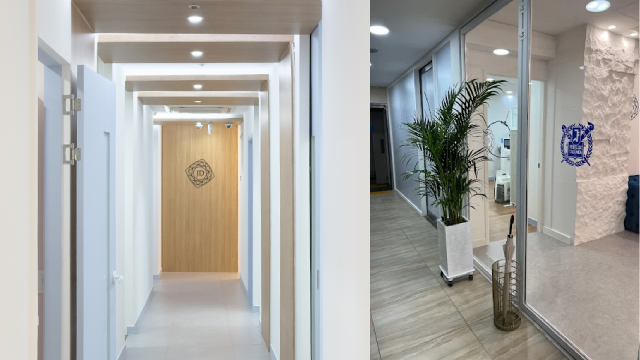
If you want to know whether focused ultrasound suits your face — including whether it is the wrong choice for it — that is what the assessment is for. JD Clinic is located at B2, 616 Gangnam-daero, Gangnam-gu, Seoul, Republic of Korea, and can be reached on +82-2-523-7581 or through the clinic's contact page. Consultations run Monday to Thursday from 09:30 to 19:00, Friday until 21:00 and Saturday until 16:00, with a lunch break on weekdays from 13:00 to 14:00.
International patients can start with an online enquiry through the JD Clinic contact page, and an English-speaking coordinator will follow up.
Disclaimer
This page is for general information only and is not medical advice, a diagnosis, or a treatment recommendation. Outcomes differ from person to person, and whether any treatment is appropriate for you can only be decided in a consultation with a qualified doctor.
Sources & Further Reading
Ultrasound Therapy for Sagging Skin — American Society for Dermatologic Surgery
Non-invasive Skin Tightening Treatments — American Society for Dermatologic Surgery
Many ways to firm sagging skin — American Academy of Dermatology
The licensing of non-surgical cosmetic procedures in England: consultation document — UK Department of Health and Social Care
Important Clinical & Safety Notice
Individual results may vary depending on personal health conditions. Potential side effects such as swelling, bruising, or inflammation may occur; please consult thoroughly with your specialist prior to treatment.
CLINICAL STANDARDS
Precision Diagnosis, Direct Specialist Care & Recovery Protocol
1:1 Anatomical Planning
Tailored clinical protocols based on thorough anatomical evaluation and 1:1 specialist consultation.
Certified Safety & Sterilization
Strict aseptic protocols and continuous vital monitoring throughout every stage of your procedure.
Structured Recovery & Follow-Up
Dedicated post-procedure care and scheduled follow-ups for a smooth, confident recovery.
START YOUR CARE JOURNEY
Experience Personalized Medical Excellence at JD Clinic
Book your private consultation today and discover care tailored around you.