SPECIALTY CLINICAL GUIDE
Trinity Multi-Energy Skin Rejuvenation
Trinity multi-energy rejuvenation at JD Clinic in Gangnam, Seoul — three diode wavelengths at different depths for laxity and elasticity, a 30-minute session, same-day recovery, English consultation.
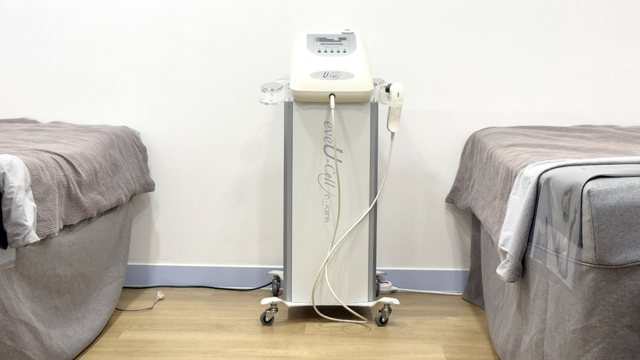
Trinity Multi-Energy Skin Rejuvenation is a non-surgical, energy-based treatment aimed at skin laxity, fine lines, wrinkles, skin tone and overall elasticity.
Trinity Multi-Energy Skin Rejuvenation

Medically reviewed by Dr. Jin-Woo Doh, Representative Director, JD Clinic, Gangnam, Seoul
Trinity Multi-Energy Skin Rejuvenation is a non-surgical, energy-based treatment aimed at skin laxity, fine lines, wrinkles, skin tone and overall elasticity. Under JD Clinic's facial lifting and skin tightening menu in Gangnam, Seoul, it is the treatment chosen when firmness is the primary concern and skin quality is a secondary one — the appeal being that three wavelengths reach three different depths in a single thirty-minute session, with the day returned to you afterwards.
JD Clinic's doctor mapping is recorded at the specialty level, so this page names the doctors who direct care for this treatment area rather than claiming that one named doctor personally carries out every individual session.
What Is Trinity Multi-Energy Skin Rejuvenation?
Trinity delivers three diode-laser wavelengths — 755 nm, 808 nm and 1064 nm — designed to place energy at different tissue depths, with contact cooling built into the handpiece.
Three wavelengths, three depths. That is the reason the treatment addresses tightening and tone in one pass rather than in two appointments.
Cooling is part of the handpiece. The Trinity applicator incorporates contact cooling, in three levels.
No anaesthesia is used.
The session is about thirty minutes, with same-day recovery.
The rhythm is monthly. The clinic records a maintenance period of approximately two to three months and retreatment recommended once a month.
Within the lifting menu, this page's concern is laxity and elasticity. The clinic also offers a Trinity treatment under its pigmentation, pore and scar menu, and under skin boosters — the same platform, aimed at different concerns, and assessed differently at consultation.
Who Performs Trinity Multi-Energy Skin Rejuvenation at JD Clinic


Dr. Jin-Woo Doh
Representative Director of JD Clinic
Dr, Hyunseon Kee
Director of JD Clinic
Care in this treatment area is directed by Dr. Jin-Woo Doh, Representative Director of JD Clinic, who graduated from Seoul National University College of Medicine and serves as a Guest Professor at Seoul National University Hospital. Non-surgical facial lifting and anti-aging is the first of his listed core specializations.
Treatment begins with a consultation assessing skin condition, the degree of laxity, pigmentation concerns, goals and suitability, after which the approach is selected. The clinic's records do not describe a proprietary Trinity technique, so this page does not claim one. What they do describe as risk-reducing is concrete: skin assessment, appropriate parameter selection, controlled energy delivery, and the handpiece's three levels of contact cooling.
He is a full member of the Korean Society of Aesthetic Surgery, the Korean Society of Aesthetic Plastic Surgery, the International Society of Aesthetic Surgery, the Korean Society for Obesity Treatment, and the Korean Society of Aesthetic Plastic Surgery and Laser. JD Clinic has not provided licence or board-status records for this page, so none is claimed here.
JD Clinic describes its approach as assessing skin thickness, the degree of laxity and facial structure before selecting a device, then targeting the intended tissue layer with the minimum number of passes needed rather than applying one fixed setting to every patient.
Who Is a Good Candidate for Trinity Multi-Energy Skin Rejuvenation?
Adults concerned about reduced skin elasticity
People with fine lines, wrinkles or mild laxity
Those whose tone is uneven alongside a loss of firmness
Patients for whom a clinician considers multi-wavelength energy treatment appropriate
Anyone who needs a treatment with same-day recovery
Treatment may need to be postponed or replaced with another option for:
Patients with active skin infection in the treatment area
Anyone with significant inflammation or irritation there
People with other conditions that make energy-based treatment inappropriate
Medical history and skin condition are reviewed before treatment. For a diode-laser treatment, skin type is part of that review rather than an afterthought — the risk of a pigmentary reaction is not the same across all skin tones, and the settings that suit one do not automatically suit another.
The practical value of a multi-wavelength platform is also worth stating plainly, because it is easy to oversell. Reaching three depths in one pass is a convenience and a breadth advantage; it is not a way of doing three separate treatments at once. A patient whose laxity is the dominant problem may still be better served by a treatment built for depth, and a patient whose pigmentation is the dominant problem by one built for pigment. What a platform like this does well is address a face where no single concern dominates — which is a common situation, and one that otherwise ends up being treated piecemeal.
What to Expect: Procedure, Recovery, and Results Timeline
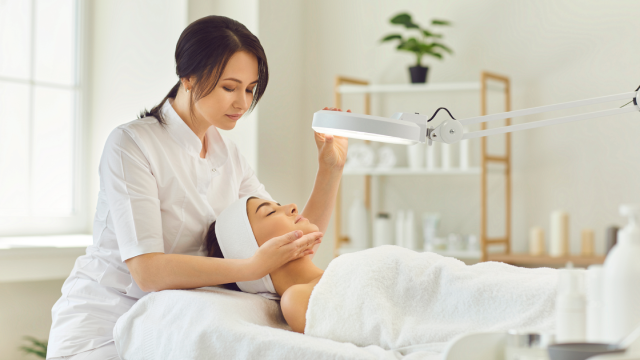
The sequence is consultation and skin assessment; preparation of the skin; application of the Trinity handpiece to the selected areas; delivery of controlled multi-wavelength energy; then a check of the skin and post-treatment instructions.
Stage
What happens
Timing
Consultation
Skin condition, laxity, tone, goals, suitability
Before treatment
Treatment
Three diode wavelengths with contact cooling
Approximately 30 minutes
Anaesthesia
None used
—
Recovery
Same day
Immediately
First effects
Become noticeable
About 2–3 days
Maintenance
Stated period
Approximately 2–3 months
Retreatment
Recommended interval
Once a month
Trinity may produce a warm or hot sensation during treatment. Temporary redness or warmth may occur afterwards, depending on the intensity used and individual skin response, and the clinic records same-day recovery.
The clinic's records mark pre-procedure preparation and the aftercare protocol as requiring clinic confirmation for this treatment, so this page does not state either — a page that invented them would be inventing the part a patient actually has to follow. What its own FAQ does give is the general rule: avoid excessive sun exposure and tanning beforehand, do not proceed over actively irritated or infected skin, and tell the clinician about recent aesthetic treatments and about products or medications that may increase skin sensitivity.
The clinic's records do not state a recommended length of stay or a flight interval for this treatment. Given same-day recovery, a short visit is plausible, but the schedule should be confirmed with the clinic rather than read off this page. The clinic operates a 24-hour post-treatment feedback system, and English-language aftercare is available through remote follow-up consultation and ongoing channels such as email and messaging once a patient has returned home.
Combining Trinity Multi-Energy Skin Rejuvenation with Other Treatments
The clinic's records do not state a combination protocol for this treatment, so this page does not describe one. The monthly retreatment rhythm is the practical scheduling fact: anything else planned in the same month has to be considered against it, and that is a conversation for the treating clinician.
Alternatives include radiofrequency treatments, focused ultrasound, fractional laser treatments and other energy-based skin-tightening technologies. Where the dominant concern turns out to be pigmentation rather than firmness, the pigmentation treatment area addresses it more directly than a tightening-led plan would. And where a contour has genuinely descended rather than softened, no energy treatment on this menu is the answer; a consultation that says so early saves a course of sessions aimed at the wrong problem. More about the clinic and its team is on the JD Clinic about page.
Safety, Precision, and Clinic Standards
JD Clinic has been registered since 2023 as a Registered Medical Institution for Attracting Foreign Patients, certified by the Ministry of Health and Welfare in compliance with the Medical Overseas Expansion and Foreign Patients Attraction Act. The clinic's business registration number is 530-11-00701.
The clinic's stated quality-control process is individualised medical assessment rather than device-led selection, with treatment that is not needed avoided rather than added. Consultation and treatment are physician-led. For this treatment specifically, the clinic identifies skin assessment, parameter selection, controlled energy delivery and the handpiece's three levels of contact cooling as what reduces risk.
Laser treatment of the skin is a regulated medical procedure. The U.S. Food and Drug Administration describes its recognised risks as incomplete treatment, pain, infection, bleeding, scarring and changes in skin colour. The potential risks specific to a diode-laser treatment are burns, pigmentary changes, prolonged redness, irritation and other skin reactions, with the level of risk depending on skin type, the settings used and individual response — which is why parameter selection is the substance of the safety discussion rather than a technical footnote.
The American Society for Dermatologic Surgery advises avoiding sun exposure, tanning and peels in the weeks before laser and light therapy for sun-damaged skin. On outcome, the American Academy of Dermatology describes non-invasive skin tightening as producing gradual, modest lifting rather than surgical results, with ultrasound and radiofrequency changes typically developing over roughly two to six months.
English-language support is provided by a dedicated international patient coordinator, Cheon Seung-yeon, Team Manager, on weekdays from 09:30 to 19:00, with Korean and Japanese coordination also available.
The Bottom Line
Trinity uses three diode wavelengths — 755, 808 and 1064 nm — to reach different depths in one session.
Under this treatment area the concern is laxity and elasticity; the same platform appears elsewhere for pigment and for skin quality.
About thirty minutes, no anaesthesia, same-day recovery, first effects at two to three days.
The clinic plans it monthly, with maintenance described over two to three months.
Skin type belongs in the settings conversation — pigmentary reaction risk is not uniform.
Frequently Asked Questions
Who is a good candidate for Trinity Multi-Energy Skin Rejuvenation?
People concerned about reduced skin elasticity, fine lines, wrinkles, mild skin laxity, pigmentation or uneven skin tone. Under this treatment area the emphasis is firmness and elasticity; if pigment is the dominant concern rather than a secondary one, the pigmentation route is the more direct conversation.
Who should postpone treatment?
Anyone with active skin infection, significant inflammation, irritation or another condition in the treatment area that could increase risk. Medical history and skin condition are reviewed before treatment, and that review is where skin type and any previous pigmentary reaction belong.
How long does it take, and is anaesthesia used?
Approximately thirty minutes, and no anaesthesia is used. You may feel a warm or hot sensation while the energy is delivered; the handpiece's three levels of contact cooling are what manage that during the session.
What do the three wavelengths do?
They are designed to deliver energy at different tissue depths — 755 nm, 808 nm and 1064 nm — which is what allows a single session to address firmness and tone rather than one or the other. Which combination of settings suits you is decided from the skin assessment.
When will I see results, and how often is it repeated?
Effects typically begin to appear within two to three days of treatment, with the degree and duration varying by individual, settings and skin condition. The clinic records a maintenance period of approximately two to three months and recommends retreatment once a month.
What is recovery like?
The clinic records same-day recovery. Temporary redness or warmth may occur depending on the intensity used and how your skin responds. There is no stated downtime beyond that, though what you actually experience is worth reporting if it lasts longer than the clinic told you to expect.
What risks should I know about?
Burns, pigmentary changes, prolonged redness, irritation and other skin reactions are the potential risks of laser-based treatment, and the level of risk depends on skin type, the parameters used and individual response. This is the reason the assessment matters more than the device name.
Does JD Clinic publish a price for Trinity?
JD Clinic does not publish treatment prices for this market; a quotation is given after an individual consultation. With a monthly retreatment rhythm, the number of sessions being proposed is the figure worth establishing first.
Book a Consultation at JD Clinic
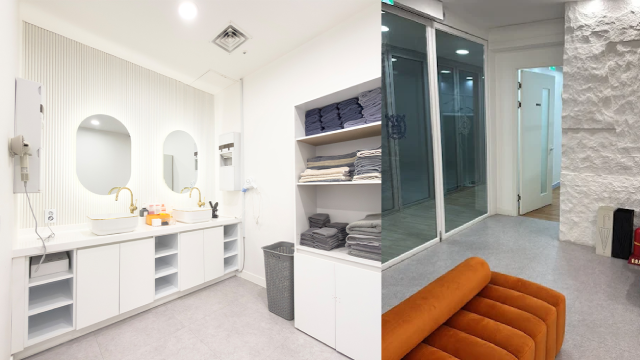
If firmness and elasticity are your main concern and you would rather not lose a day to recovery, Trinity is one of the options a consultation will weigh. JD Clinic is located at B2, 616 Gangnam-daero, Gangnam-gu, Seoul, Republic of Korea, and can be reached on +82-2-523-7581 or through the clinic's contact page. Consultations run Monday to Thursday from 09:30 to 19:00, Friday until 21:00 and Saturday until 16:00, with a lunch break on weekdays from 13:00 to 14:00.
International patients can start with an online enquiry through the JD Clinic contact page, and an English-speaking coordinator will follow up.
Disclaimer
This page is for general information only and is not medical advice, a diagnosis, or a treatment recommendation. Outcomes differ from person to person, and whether any treatment is appropriate for you can only be decided in a consultation with a qualified doctor.
Sources & Further Reading
Medical Lasers — U.S. Food and Drug Administration
Laser/light Therapy for Sun-damaged Skin — American Society for Dermatologic Surgery
Non-invasive Skin Tightening Treatments — American Society for Dermatologic Surgery
Many ways to firm sagging skin — American Academy of Dermatology
Important Clinical & Safety Notice
Individual results may vary depending on personal health conditions. Potential side effects such as swelling, bruising, or inflammation may occur; please consult thoroughly with your specialist prior to treatment.
CLINICAL STANDARDS
Precision Diagnosis, Direct Specialist Care & Recovery Protocol
1:1 Anatomical Planning
Tailored clinical protocols based on thorough anatomical evaluation and 1:1 specialist consultation.
Certified Safety & Sterilization
Strict aseptic protocols and continuous vital monitoring throughout every stage of your procedure.
Structured Recovery & Follow-Up
Dedicated post-procedure care and scheduled follow-ups for a smooth, confident recovery.
START YOUR CARE JOURNEY
Experience Personalized Medical Excellence at JD Clinic
Book your private consultation today and discover care tailored around you.